A service and coverage map
Distinguish where you send crews, which jobs can be done in each area, and how a visitor can check an address with your team.
Local SEO
Help nearby customers understand what you do and whether you serve their address. Connect service pages, accurate coverage, your eligible Business Profile, and a measurable call or quote path.

Distinguish where you send crews, which jobs can be done in each area, and how a visitor can check an address with your team.
Service and area pages built around real questions, alongside a review of eligible Business Profile information and consistent customer-facing details.
An agreed way to compare landing pages, ZIPs, requested service, eligibility, and bookings. Review what the team can actually dispatch.
Build useful coverage pages around real boundaries, travel logistics, and availability. Match the site with what dispatch can accept.
Review the correct business name, phone, hours, categories, and eligibility. Use the actual business footprint as the basis for location content.
Distinguish a qualified call from a vendor pitch, out-of-area request, or hang-up. Review the results by geography and service.
We start with the communities your team can reach and the work you want. Search Console can show which queries and website pages already earn impressions and clicks. Dispatch or sales can tell us whether those visits produce suitable requests. Together those records help us choose between updating the profile, improving a service page, or making coverage easier to check.
| Situation | Where to improve it | How to verify the change |
|---|---|---|
| Customer wants a nearby provider | Eligible Business Profile and relevant location or service page | Check accurate hours and the phone, directions, or appointment path. |
| Prospect checks whether you travel to their area | Coverage hub or a useful city page | Check the address criteria against what dispatch can handle. |
| Local buyer compares a specific service | Focused service page with real scope and evidence | Compare suitable calls, estimates, or bookings by page and service. |
Review actual eligibility, staffed hours, public contact details, and accurate categories. Use authorized photos with useful captions. A neutral review request after completed work can help customers share genuine experiences.
Compare relevant map listings, established directories, and industry associations with the current business name, public address if appropriate, and phone. Prioritize inaccurate sources that customers recognize.
Select pages based on real territory and useful differences in service or scheduling. Use your form and compatible call tracking to record the source, service, geography, and what happened to the request.
We rebuilt Good As New around 27 city pages, a 46-URL sitemap, and on-page pricing and quote requests. The case study shows what was published and how we checked the site and quote paths.
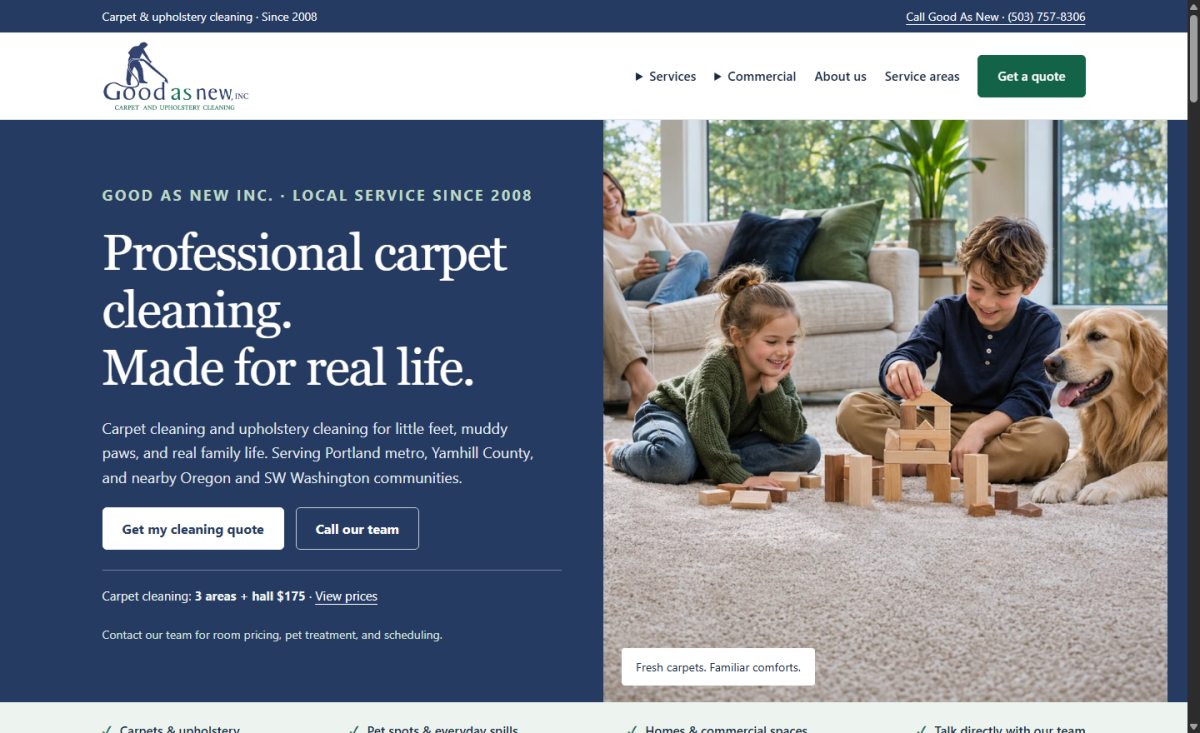
Good As New · WordPress rebuild
The site puts the quote right where visitors compare room prices or check service coverage. Explore the live website and what went into the build.
For field-service teams with clear operating hours, actual service areas, and a person who can answer or qualify local requests.
Eligibility depends on the real operating footprint and Google’s rules. Service areas can show where one eligible business works. We review distinct locations, staffing, and address visibility before making changes.
We can improve the website information people in that area need and make the profile’s actual coverage accurate. Google also considers distance, so where a customer searches from affects what they see.
A single profile and a few priority services differ from a migration or a multi-location engagement. The quote should name the profiles, pages, directory checks, and measurement work covered.
Compare website source data and, where available, profile reporting and call records. Confirm with staff which contacts were qualified and which became estimates or bookings.
Target actual packages and high-intent services like interior detailing or paint correction only where offered. Make mobile territory and shop availability clear.
Use separate pages for real shop specialties and routine maintenance. Match customer language about symptoms or services without making diagnoses on a web page.
Separate carpet or specialty work, move-outs, and commercial cleaning where decision criteria differ. Use service-area content that helps customers understand coverage.
Plan around local service intent and planned projects. Look separately at electrician calls, EV charger installs, and panel upgrades so visitors land on a relevant page.
Map kitchen, bathroom, addition, and full-house searches to distinct useful pages. Connect those pages to actual photo permission and service geography.
Prioritize furnace repair, AC service, heat pump installation, and other work you actually handle. Match city pages to crew coverage and seasonal capacity.
Plan separate pages for recurring landscape maintenance, installation, and specific specialist work. Explain routes and seasonality rather than publishing every possible city.
Organize around move type and service coverage. Customers should be able to see whether you serve their origin and destination before starting a long quote form.
Map interior, exterior, cabinet and commercial painting to distinct intents where offered. Use service-area information and original examples to support the buying decision.
Create pages for the issues your team can actually inspect or treat. Build local context around service coverage, seasonal demand, and the process after an inquiry.
Build around high-intent service searches such as drain cleaning, water heater installation, and leak repair. Clarify which neighborhoods and systems the team can serve.
Separate repair and replacement searches so a customer with a leak is not sent to a material comparison. Build commercial roofing content around systems you handle.
Project inquiries
Share your services, where you take work, real availability, and repeated out-of-area or otherwise ineligible inquiries.